
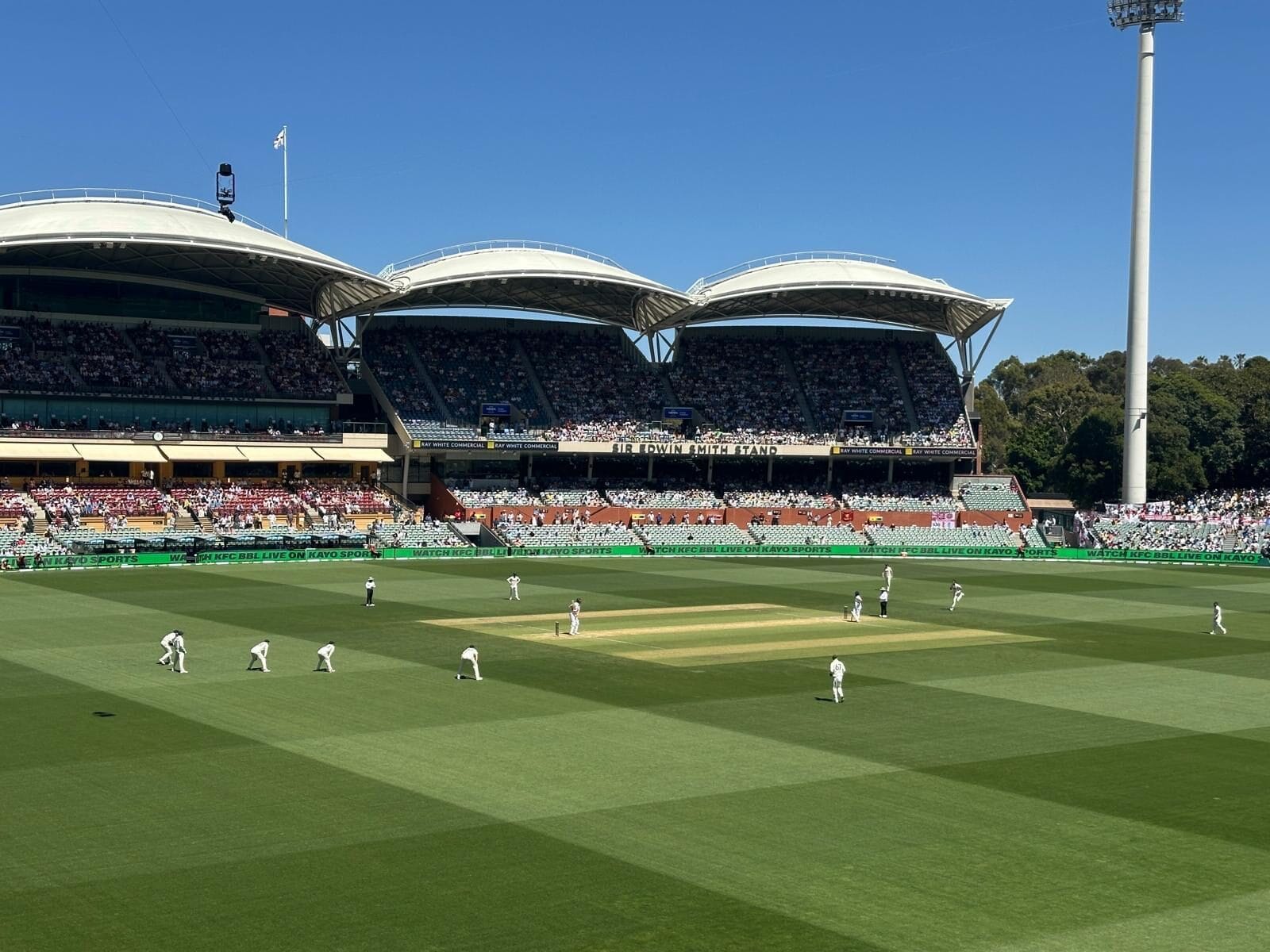
Well, I didn’t get it all wrong.
In my Ashes preview, I made it clear that what was needed to win in Australia was a batter who would do something exceptional – get three hundreds or average BIG – Walter Hammond in 1928-29, Geoff Boycott in 1970-71, Chris Broad in 1986-87, Alastair Cook in 2010-11 – and/or a bowler of genuine pace and ability – Harold Larwood in 1932-33, Frank Tyson in 1954-55, John Snow in 1970-71. Well, step forward Travis Head and Mitchell Starc.
To be fair, I didn’t say England would win. What I said was that England had their best chance of winning since 2010-11. In the intervening period they had played fifteen Tests in Australia, drawn two and won none. I suspect even Glenn McGrath would have agreed that this was England’s best chance of winning since 2010-11, his inevitable five-nil prediction notwithstanding.I think few observers would deny that England seemed to be a better team than the one that toured Australia in 2021-22, despite the retirements of James Anderson and Stuart Broad, and the non-selection Jonny Bairstow, the only English batter to have scored two Test centuries in Australia in the course of those fifteen games. This, of course, is precisely why people are so upset and disappointed.
I said that Australia only lose at home when they are demonstrably poor – at least, poorer than their England contemporaries – or going through a transitional phase and thus vulnerable. There was a feeling that this might be the case here. In particular, could their exceptional four-man attack go on indefinitely, apparently ignoring the passage of the years? Well, apparently no, they couldn’t. Josh Hazlewood missed all five games; captain Pat Cummins missed four; off-spinner Nathan Lyon missed three (Cummins and Lyon played decisive roles in the series clincher at the Adelaide Oval). The trouble was, it didn’t make any difference. Starc had the series of his life – 31 wickets at 19.93 – and the reserves, Scott Boland and Michael Neser in particular, were simply too good for the England batters. And it wasn’t as if they had to work especially hard (although they had to bowl through 40’ heat on the second day at Adelaide when the conditions were really punishing). All they really had to do was keep putting the ball on a decent length just outside off and soon enough an England batter would oblige. England had to work much harder for their wickets – Brydon Carse took 22 wickets, second only to Starc, but averaged over 30 and had an economy rate of 4.81. The prized pace duo of Mark Wood and Jofra Archer predictably dropped out, in Wood’s case wicketless after one match. The makeshift spinner Will Jacks – the leading spinner of the last two years, Shoaib Bashir, played not a single game – conceded over a hundred runs in each innings in Adelaide. As for Australia’s batting, except at Melbourne, when runs were needed someone would provide them. Head, promoted to open in the second innings at Perth, had the series of his life. Alex Carey, whose keeping epitomised Australia’s superiority in the field, was very consistent with the bat. And at Sydney, Steve Smith, a successful captain once again, scored his thirteenth Ashes century, overtaking Jack Hobbs; only Don Bradman, with nineteen, has scored more.
It can be said that England seemed to get better as the series went on. But that was only because the first two games were utterly humiliating. To make it worse, they were humiliating in completely different ways. Perth was a one-off, all over in two days thanks to Head’s astonishing batting; Austral committed one of Test cricket’s most extreme cases of aggravated larceny.
Brisbane was different. Joe Root got a hundred on the first day. That was nice. Zak Crawley, who had bagged a pair at Perth, made 77 but nobody else got fifty. When you win the toss and bat in Australia you need to get 400 at least; 334 just did not seem enough.
When Australia batted, it was like a tutorial in how Test cricket actually works. They made 511. The highest scorer was the ubiquitous Starc, with 77; the lowest scorer was Brendan Doggett with thirteen off 21 balls. The top six all made between 33 and 72. There were six partnerships of fifty or more. The last four wickets put on 82 to ensure England started their second innings against the new pink ball at the worst possible time. The result was a formality, though Ben Stokes demonstrated grit and tenacity.
That England got better as the series progressed is no more than a consequence of their actually having played some cricket, albeit not very well. That was something that the management team seemed anxious to avoid doing as part of the so-called preparation, which one assumed had begun when the new team was appointed soon after the catastrophic loss to the West Indies in 2022. Even when a break occurred after the Brisbane Test, rather than playing cricket the squad went on holiday.
I have just finished Tim Wigmore’s excellent Test Cricket, which is full of perceptive observations from great players about how they played the game, as well as shrewd observations from Wigmore himself. England’s coach Brendon McCullum doesn’t believe in taking advice from anyone but he could have done a lot worse than look at this book. Wigmore spoke to Andy Flower and Andrew Strauss, England coach and captain when they last won Down Under, in 2010-11: “The summer before the Ashes, Strauss held dinners with three or four players at a time, helping them to shape the tour – including the focus on winning warm-up matches before the first Test rather than merely treat them, like glorified practice. This helped to forge an intensity in the field; England effected four run-outs in the series, Australia none.” How different it was in 2025-26, with the fielding being noticeably poorer than Australia’s.
Colin Cowdrey used to say it took a while to get used to the light and the bounce in Australia. Of course it’s a different world now, and tours of even fifteen years ago are unrecognisable today, mainly because of the pressures of the international schedule. But Australia, like India, is very different from England. That doesn’t seem to matter to England’s management team. Their “method” – running at the danger, and all the rest of it, will bring results. Well, so far it’s four one to the home side in both Australia and India.
The one victory in India in 2023-24, in the first Test at Hyderabad, was a genuine classic, illuminated by Ollie Pope’s brilliant 196 in England’s second innings, when they were facing a deficit of 210, and Tom Hartley‘s [Who he? Ed ] seven fourth innings wickets.
Melbourne 2025-26 was completely different. Like Perth it was all over in two days. It barely seemed like a Test match at all. The pitch was a disgrace and one could see why batters operated the way they did. But while the bowling was adequate the batting was mostly rubbish.It was good to see England win, and to see Jacob Bethell announce himself on such a large stage but one was tempted to wonder, do any of these people really care about Test cricket?
It is not easy to put one’s finger on precisely why England can sometimes be so bad, apart from the obvious examples of gormless shot selection and scattergun bowling. Even their severest critics would have to concede that they have played some wonderful cricket since 2022. That game in Hyderabad was a good example; England were in a precarious position but ended up winning by 28 runs. India won the other four games by margins ranging between comfortable and massive. (This England side don’t believe in playing for a draw; it’s not entertaining enough.). Hyderabad was not an isolated case. England came from behind to win a number of brilliant games in the summer of 2022, particularly against New Zealand and India, when Bairstow had one of the hottest batting streaks in Test history.
More common has become the phenomenon of England apparently being on top but not being able to capitalise on it. This was the case in the second Test against Australia at Lord’s in 2023. England were 181 for one in their first innings (Australia had made 416) when Lyon left the field for good with an injured calf muscle. Instead of making the most of this unexpected bonus England’s top order – Ben Duckett, Pope and Root – holed out one after the other to a barrage of short-pitched bowling: an early example of brainless batting. England ended up chasing a target of 371; thanks to Stokes’ brilliance they almost got there, but lost by 43 runs. How different it might have been but for that reckless batting on the second day.
The fifth Test against India in 2025 provided another example. Set a target of 374, on the fourth afternoon England were 301 for three, then 332 for four; at the close they were 339 for six. Victory, which had appeared to be a formality when Root and Harry Brook were batting together, still looked more than likely on the fifth morning but India won by six runs. Stokes’ team has been too good for most sides visiting England but they have failed to win a home series against India or Australia.
Stokes’ own decision making has occasionally contributed to the sense that there is a lack of – almost a revulsion for – the killer instinct. In the first Ashes Test of 2023 at Edgbaston he declared on the first evening with England on 393 for eight, with Root in irresistible form on 118 and Ollie Robinson in no trouble at all on 17. Why not just bat for as long as possible? Australia won that game by two wickets. In 2022-23, in the second and final Test Wellington (England had won the first, a day-night game at Mount Maunganui, by 267 runs) Stokes enforced the follow-on after England took a lead of 226. Anderson and Broad shared seven wickets in New Zealand’s first innings 207. In the second innings, perhaps not surprisingly, things were a bit different. The pair – combined age 76 – shared one wicket at a cost of 156 runs as New Zealand racked up 483. New Zealand won the game by one run. It was a magnificent game of cricket but England would surely have won if they had chosen to bat again. Instead, we had another drawn series.
Everyone knew the importance of the first Ashes Test at Perth. Cummins and Hazlewood would definitely not be playing. Australia’s top order looked vulnerable: Usman Khawaja was decidedly elderly for a modern Australian Test player, the first 39 year old to appear for them since leg-spinner Bob Holland in 1986. At lunch on the second day England were 99 ahead – they had secured a first innings lead of forty – with nine second innings wickets left. From that position the only question ought to be, how long should we bat and how many runs do we need to secure victory. Instead, by the end of the day they had lost the match by eight wickets. Having been 59 for one off fifteen overs at lunch, they were all out for 164 off 34.4 overs. In their two innings England batted a total of 67.3 overs, considerably less than a single day’s – usually academic – allocation. You are not going to win many Test matches batting like that.
As noted above Brisbane was very different but there too England had opportunities. There was a solid start with a positive partnership between Root and Zak Crawley but the rest of the batting failed to deliver. The more or less respectable score of 334 was only reached because of a last wicket stand of 70 between Root and Archer. Australia made 511 but at one point they were 311 for six and something like parity seemed plausible. Again as noted above Australian lower order showed resilience and discipline, two words not found in the Bazball lexicon.
Of course it wasn’t all bad. There was Bethell’s magnificent innings at Sydney – proper Test match batting, as the cliché goes. Josh Tongue looked good once he got into the side and took eighteen wickets at an average of twenty.Veteran Australian commentator Jim Maxwell said Tongue would be Player of the Series in 2029-30. Root scored two centuries but although he made 400 runs in the series he did not do much apart from those hundreds; his average in Australia is 38. Stokes bowled well when fit and played significant innings in Brisbane and Adelaide, but as in India in 2023-24, he averaged under twenty with the bat. Crawley, unlike Duckett, Pope or Brook, adapted his style, up to a point, and had a middling series; he batted very well in Adelaide. Archer shone periodically, with bat and ball, especially in Adelaide, where he made a fifty and took a five-for. Carse took those wickets, and biffed a few runs. The rest were disappointing, or worse.
What next for England? On top of the disappointing performance there is all the off-field stuff, especially the revelations about Brook’s behaviour in New Zealand, which the management and higher authority clearly wanted to hush up. Young cricketers get into trouble and the best will learn from their mistakes. Ricky Ponting is a good example, and Stokes himself, who was sent home from an’A’ tour, not to mention Bristol. But neither of them was captain – Brook is England’s one-day captain – and the incident in question took place the night before a match. It seems almost bizarre that he was basically given a slap on the wrist, plus, it appears, a final warning, which suggests this was not an isolated incident. His pre-Series interview in Sri Lanka did not really suggest that Brook is fully aware of all the implications of the situation he finds himself in. To be fair to him it is unlikely that he wanted the captaincy thrust upon him at such a young age. Not everyone can be like Graeme Smith: but maybe Bethell could be. It would be reassuring if Brook would actually do what he says he will do, and stop getting out in stupid ways. The fact is, though, that he averages 56 in 35 Tests, and has scored more runs than Root in the Tests they have played together.
In the summer of 2026 England play two Test series, against New Zealand and Pakistan. The fact is that if they were to carry on as though nothing had happened they would probably win both series comfortably. That would hardly be papering over the cracks but it may well happen. Stokes will obviously remain as captain. Wicketkeeper Jamie Smith seems the most likely to use his spot; he has disappeared from the white ball squad. Will he be replaced by the world’s best keeper Ben Foakes? Probably not; maybe it will be James Rew.
The really interesting issue is whether McCullum will still be coach. As he is in the almost impossible position of being an all-format coach he has to get through the Sri Lanka series and the WorldT20 first. They ought to be irrelevant really. The only question is should he still be the Test match coach. In that regard it is important to remember the difference McCullum made when he came on board in 2022. It looks at the moment though that too many players are having issues and what many of them need is the sort of technical coaching that McCullum doesn’t seem to think is part of his job. On balance it looks as though England Test cricket will be moving into a new era.
5 comments
Simon
Brilliant article Bill, well researched, presented and with great insight as usual! You have highlighted some challenging issues for the English. I will not be upset if they fail to learn.
Richard Pettinger
Pretty much spot on! The main thing is that England players do not play enough cricket between test series. All of the Australians had at least two games directly before the series started, and so were match fit. England had no plan b for if/when Archer and Wood became injured. England also took the active decision to play the worst spinner available – Jacks is not a test level bowler. They should either have taken Rehan, Dawson or Leach and played whichever of them in all five tests, or else they should have played Shoaib as he was there with them anyway. It was totally disorganised from start to finish and they need to have a real re think about how to play test cricket in the future. And a footnote on Brook – the person who gets Brook out the most often is Brook!
Nambi Viswalingam
Riveting reading, Bill. Has delayed the start of my working day. But I couldn’t stop reading!
Steve
Excellent as ever, thorough, knowledgeable and beautifully well written. Well done !
Bruce Freeman
I’ve visited rural NSW ten times from the late ’90s. The folk there are usually friendly, direct and up for some pommie banter, particularly if their roots were in the celtic parts of the UK or their elders left council house estates behind as ten pound poms. They play sport to win, especially against the poms, who they suspect have a soft centre and they cope with their climate better than a British touring side ever will.
Until we have tough, fit players who are thoroughly match fit and cricket ready, our tours will inevitably be punctuated with alcohol-inspired frolics to cope with the tension and embarrassment and individual mistakes as the mental pressure of long days in the field mount up.
What do the Aussies do that’s different? They can go home between tests but more to the point they ramp up the mateship that made Aussie fighting units formidable and feared in every conflict they’ve been in. In a word, they’re tougher than our players and even as the larrikin count drops and suburban Australians multiply, you’d still prefer to have narrow-eyed Aussies (or canny New Zealanders) in your team than many of our nerve-wracked choices.